Shrine • Yugawara
About this place
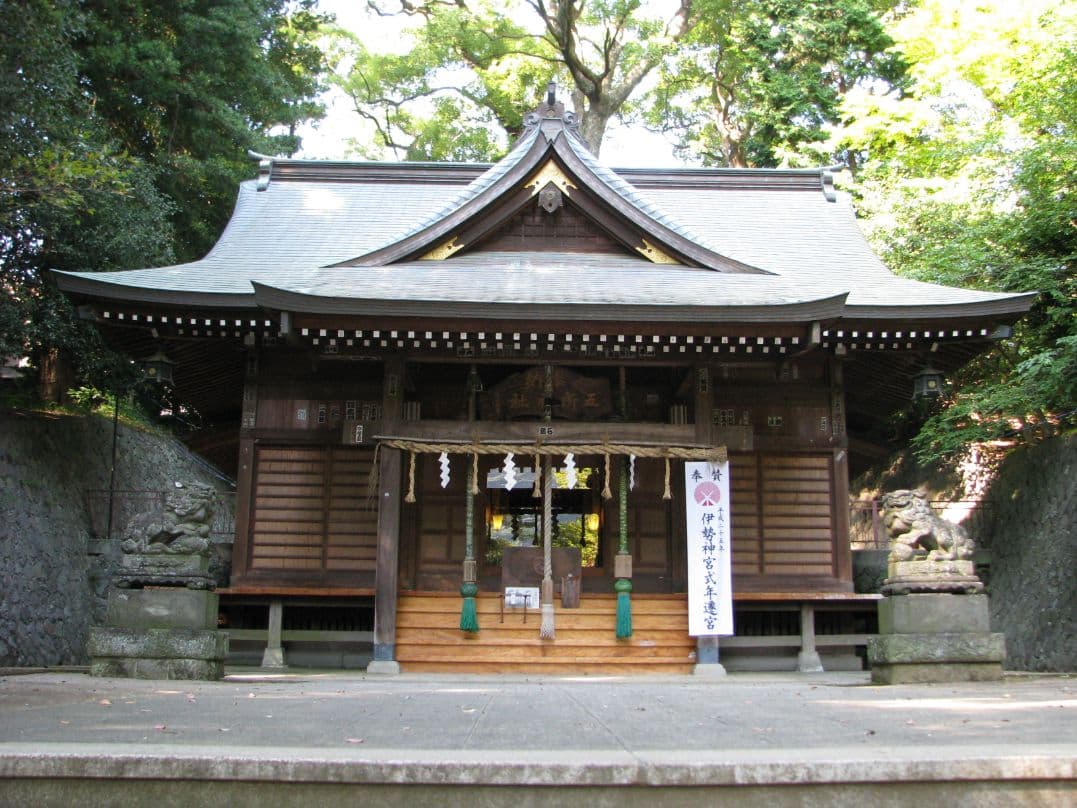
Gosho Jinja sits on a gentle rise off the road leading toward the upper valley, close enough to the station that it is easy to pass on the way to the baths, and exactly worth stopping for. The shrine traces its founding to over 1,300 years ago, making it one of the older active religious sites in this part of Kanagawa. Its connection to the Kamakura period is direct: local warrior Doi Sanehira, who would go on to found Joganji Temple a short walk downhill, prayed here before joining Minamoto no Yoritomo’s eastern campaign. Whatever one makes of power spots, the place carries a different kind of density than a newer shrine.
The chief reason to come is the camphor tree - kusunoki - standing at the center of the grounds. Estimated at over 850 years old, it pre-dates the Kamakura battles by a generation. The trunk measures 8.2 meters in circumference at the base; the canopy reaches 36 meters. Both the town and Kanagawa Prefecture have designated it a natural monument, and it appears on the prefecture’s list of 100 Famous Trees. Standing beside it is the kind of experience that resets scale: the town you arrived in an hour ago suddenly feels very recent.
The shrine grounds also house all seven statues of the Shichifukujin - the Seven Lucky Gods - making it the standard starting point for Yugawara’s Seven Lucky Gods tour circuit. Two types of goshuin are available at the shrine office. For visitors who collect stamps, this alone justifies the stop. An annual Setsubun ceremony takes place on 3 February; on every other day the grounds are quiet, unhurried, and free.
The shrine is the first stop on the town’s promoted ‘Triple Power Spot’ route, which continues to Joganji’s juniper and Makuyama Park’s Makuiwa rock. From the station, take the Okuyugawara/Fudo Falls-bound bus and alight at the Gosho Jinja stop (about 3 minutes). From the shrine it is an 8-minute walk downhill to Joganji, or continue by bus another 10 minutes to reach Fudo Falls.
Evidence
Why we say this
We promote only facts that exist in the detail record. If a field is missing or sources disagree, we either omit it or flag it below.
- Sources checked
- 3 public sources
- Data notes
- 1 conflict note
- Currentness
- Static guide record, not a live inventory feed. Confirm hours, prices, closures, and booking availability before travel.
What to know
Visit details
Address: Miyashita, Yugawara, Ashigarashimo District, Kanagawa 359-1
Access: About 3 minutes by Okuyugawara/Fudo Falls-bound bus from JR Yugawara Station; alight at Gosho Jinja stop
Hours: Always accessible (no gate or timed entry)
Admission: Free
Phone: 0465-62-5869
Highlights:
- 850-year sacred camphor tree - 8.2m girth, 36m tall (Kanagawa 100 Famous Trees)
- Town and prefectural natural monument designation
- All seven Shichifukujin statues on-site (Seven Lucky Gods tour start)
- Two types of goshuin available at the shrine office
- Part of the town’s ‘Triple Power Spot’ route
- Annual Setsubun ceremony, 3 February
Where our sources disagree
Data notes
These are points where the platforms and official pages we consulted gave us conflicting information.
- Goshuin availability: The official tourism page states two types of goshuin are available. Hours of the shrine office were not confirmed in research. For visitors specifically coming for goshuin, calling ahead (0465-62-5869) before an early morning or late afternoon visit is advisable.
Where this came from