
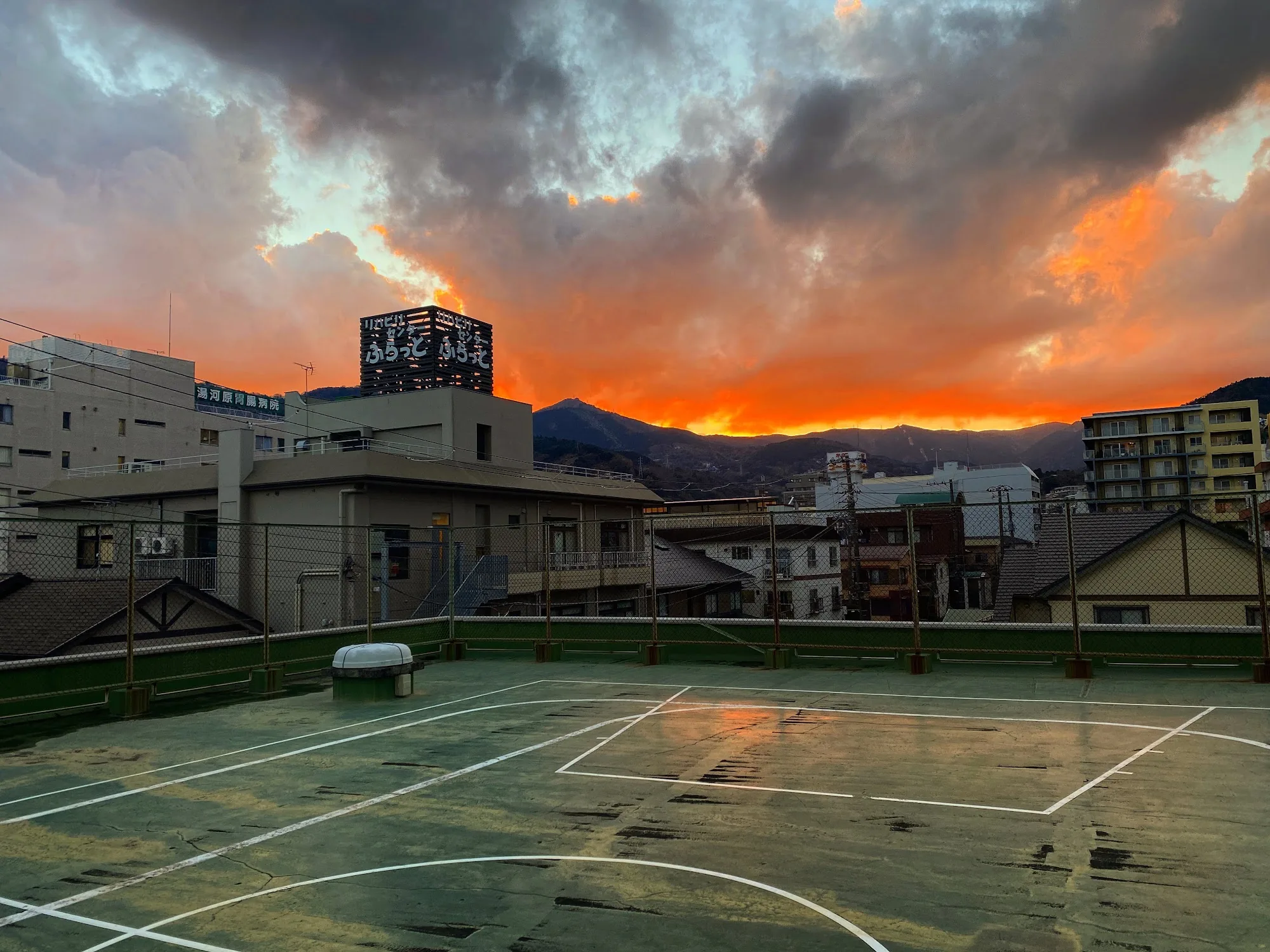
The roof changed with the time of day.
In the morning it was where I went to watch the sun come up over the sea and send photos to someone I cared about. At night the same roof filled with grills, long tables, food, drinks, fire, laughter and stories.
The barbecues were potlucks. Everyone brought something, and whatever landed on the tables became dinner. I often made a gazpacho salad with cucumber, tomato, red onion, vinegar and garlic, and people really liked it. Other nights I brought wild boar for the grill.
I liked bringing something people were happy to eat. It was a simple way to take part: make the food, carry it a few steps from my room on the third floor, set it down among everyone else's, and watch separate dishes turn into one dinner.
There was no programme. People ate around the big tables, stood by the grills, told stories and laughed. The fire set the pace. Nobody had to decide when the important part had happened. We stayed until the flames dropped and the fire burned down.
Then we cleaned up together.
I remember that as clearly as the food or the view. The night didn't end with one person left with everyone's plates, bottles, tables and ash. We'd made the evening together, and we put the roof back together too.
My room was on the same floor, right by the roof, so there was no long trip home after the barbecue. Home was already there. The place where I got up alone for the sunrise was the same place where friends ate my salad, grilled boar, swapped stories and stayed by the fire.
Nobody announced that I'd become part of the group. It didn't need saying. It was there in how the night worked: bring something, make room for what others brought, stay until the fire's done, and clean up together.
The roof held two kinds of life I needed. In the morning it gave me quiet, distance and beauty. At night it gave me warmth, laughter and other people. Both were Yugawara. Both were home.