
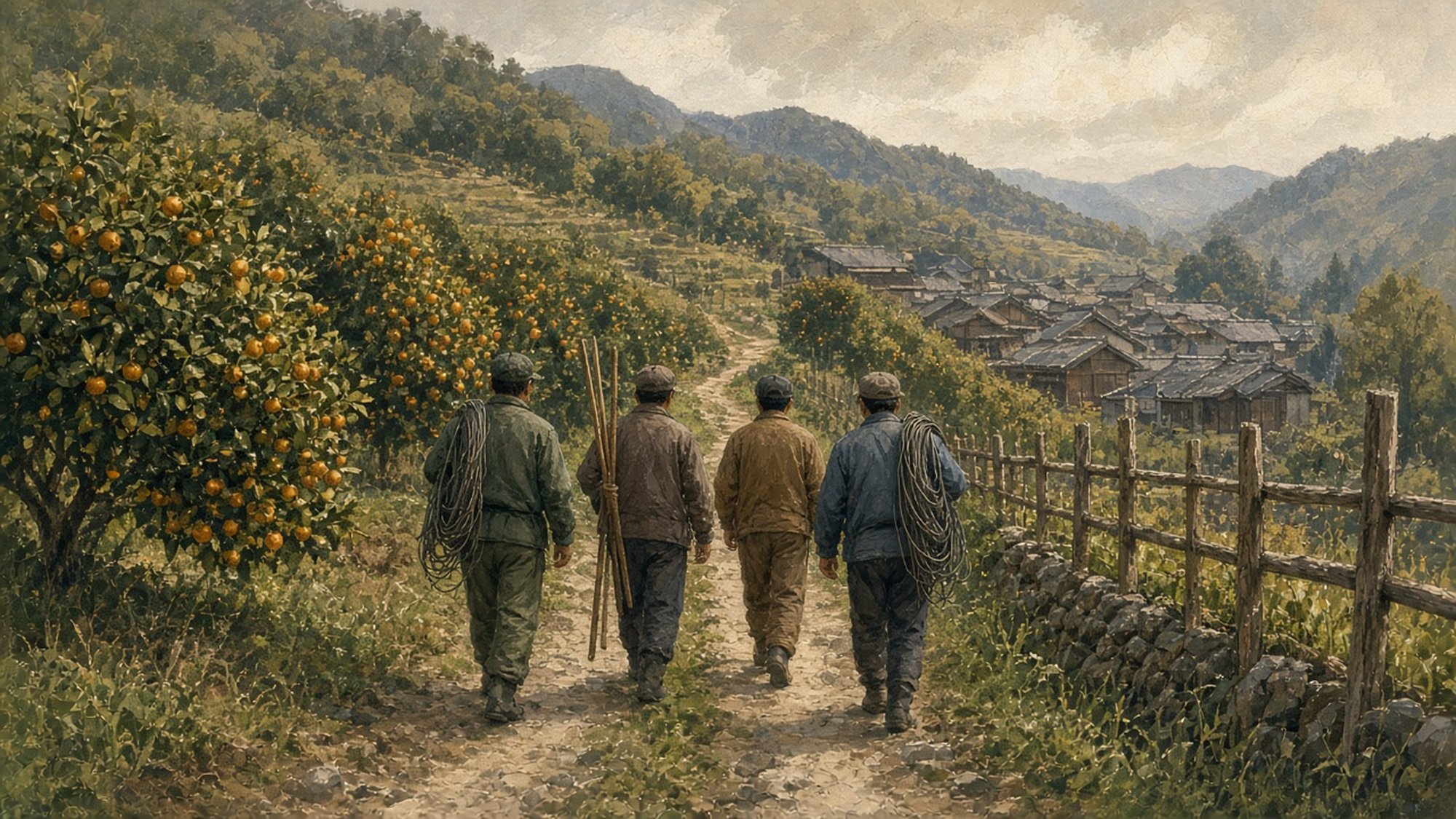
In Kawabori, the neighbours licensed themselves. When Town News visited on 17 June 2023, the Kawabori wildlife damage group was about ten volunteers, nicknamed the seven boar catchers (猪捕獲7人衆). Futami, then 63, leads them. Every member took a trap licence in July 2019. They set the group up that October.
A trap needs the town's permission and a trap licence. On the town's wild animal page, updated 1 December 2021, hunters and farmers do the capturing, and subsidies cover fences and materials. The boar were digging up fields and gardens.
The bill, the snares, and the pot
Around 2018, Town News put the damage in Kawabori above ¥5 million. Members were running about 50 snare traps. The bounty was ¥12,000 for an adult, and the meat went into a hot pot. Kanako Yamamoto (山本可奈子), then 30, was the first woman to join.
Then the numbers fell: 20 boar in fiscal 2020, 10 in fiscal 2021, 3 in fiscal 2022, and none so far in fiscal 2023, when the paper came out. Town News ties the fiscal 2022 drop to swine fever. The later positives, in Miyakami and Kajiya, are in Swine fever in Yugawara's wild boar. Swine fever does not infect humans.
Before this crew, the catch had been climbing. A town flyer from fiscal Reiwa 1, Boar damage on the rise (イノシシ被害増加中), said that year's captures were on pace to beat fiscal Heisei 30. The damage prevention plan revised in Heisei 30 set a yearly boar capture of 160. It also recorded ¥8,364,486 of mikan damage by boar in fiscal Heisei 28, across 2.89 hectares, plus kiwi, taro and vegetables. All species together came to ¥12,039,000.
Those snares were for mikan we still pick. Come autumn, the picking is in the mikan guide. Who still goes out, and how the association has aged, comes up again in a boar in Miyakami. The wider picture is on Yugawara wildlife.