A monkey on the wall
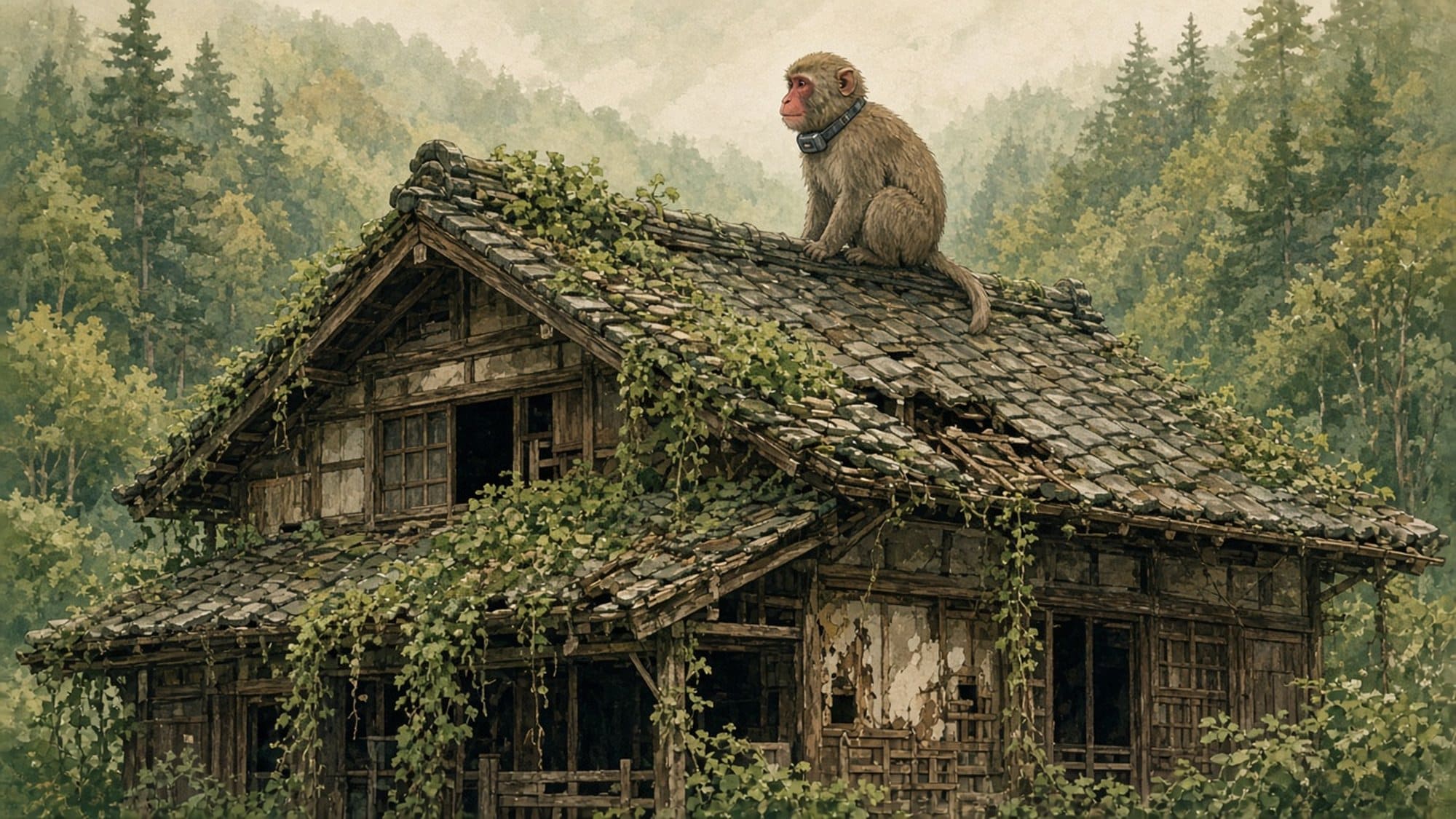
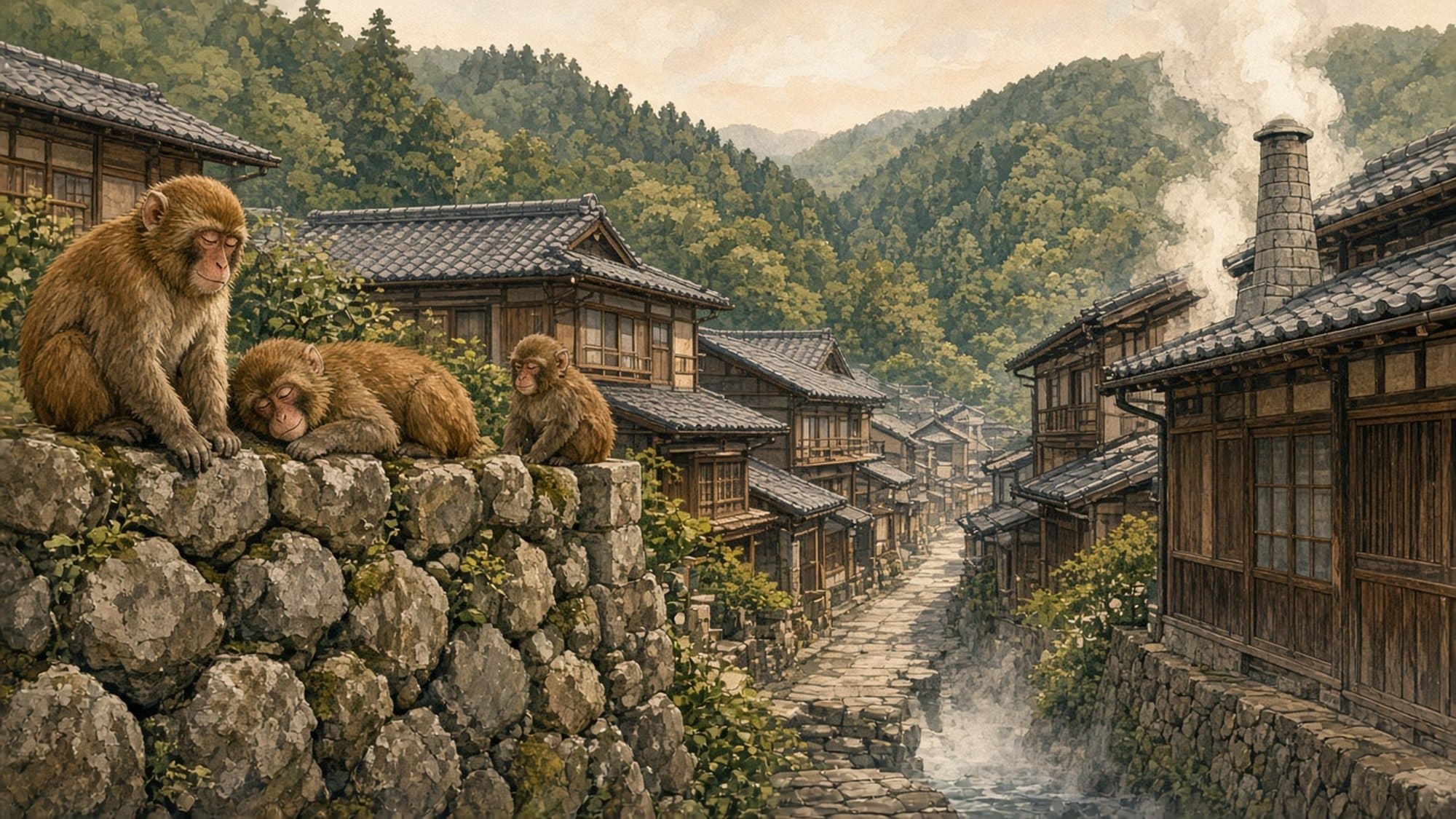
A Japanese macaque on a roof or garden wall is an arresting sight. The mountains feel suddenly close. For a visitor, it may be the photograph of the day.
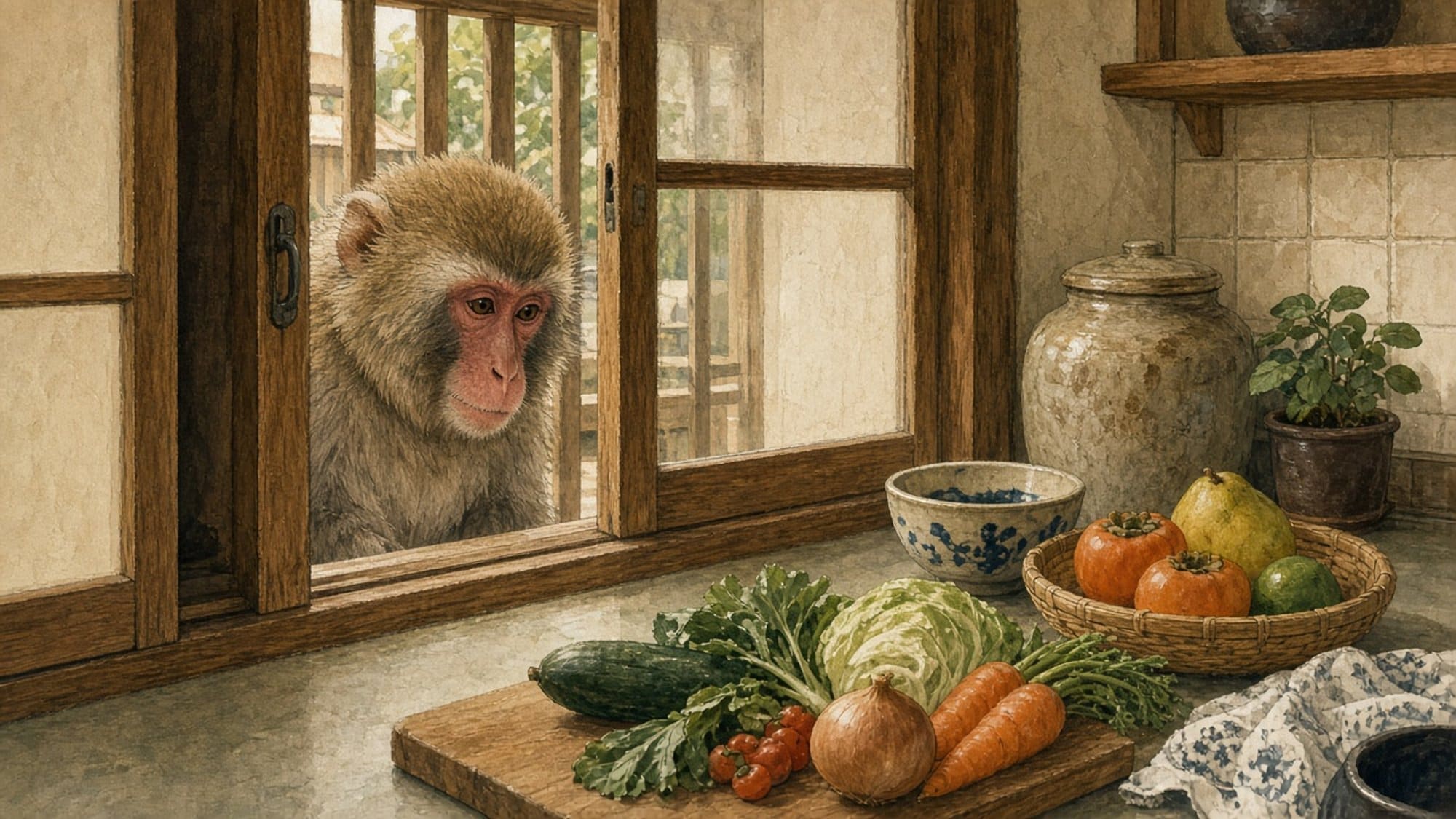
For the person whose vegetable patch has just been stripped, or who has found a monkey trying a window, the romance wears off quickly.
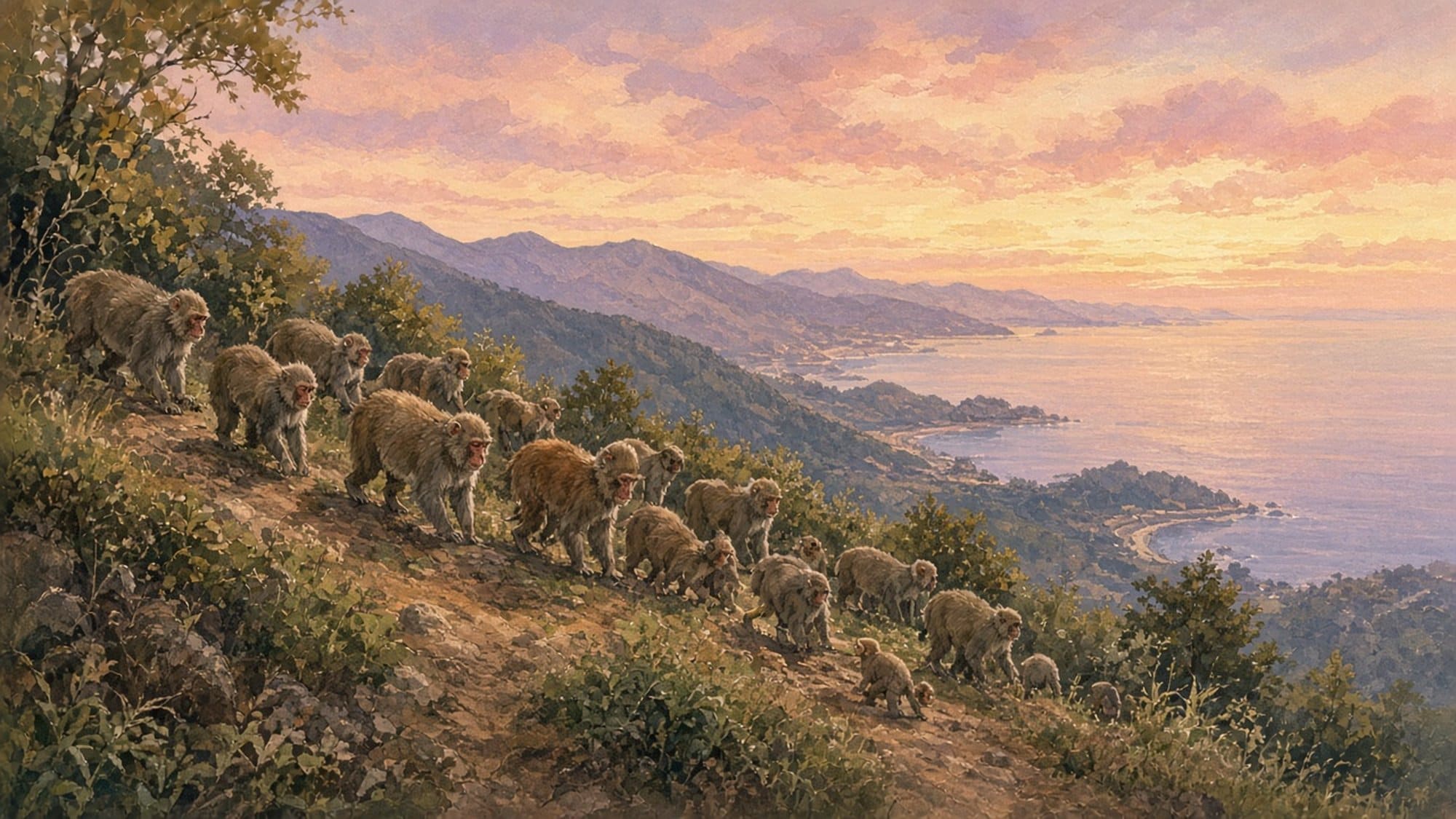
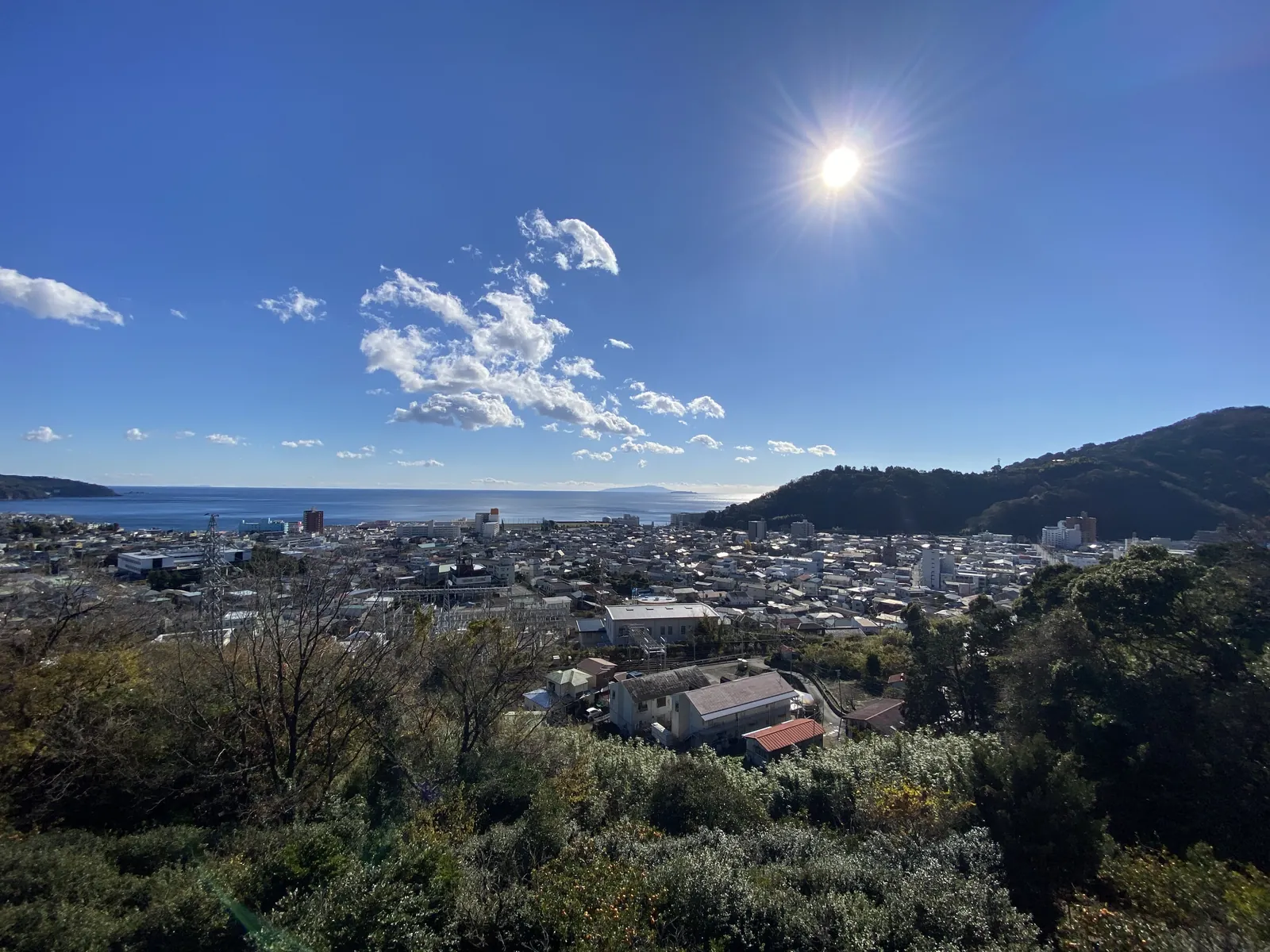
Yugawara's monkeys are not occasional animals wandering through from some distant forest. They belong to the T1 troop, the only troop in Kanagawa's Seisho regional population. Its range includes Yugawara and Manazuru in Kanagawa, and extends across the prefectural border toward Izumi in Atami.
The troop is part of Yugawara's ecology. It is also a daily management problem in the places where wooded slopes meet homes, gardens and orchards.
A small troop with a large presence
Kanagawa's current population record puts T1 at 20 animals, based on its 2025 survey. Twenty may not sound like many. The damage record tells a different story.
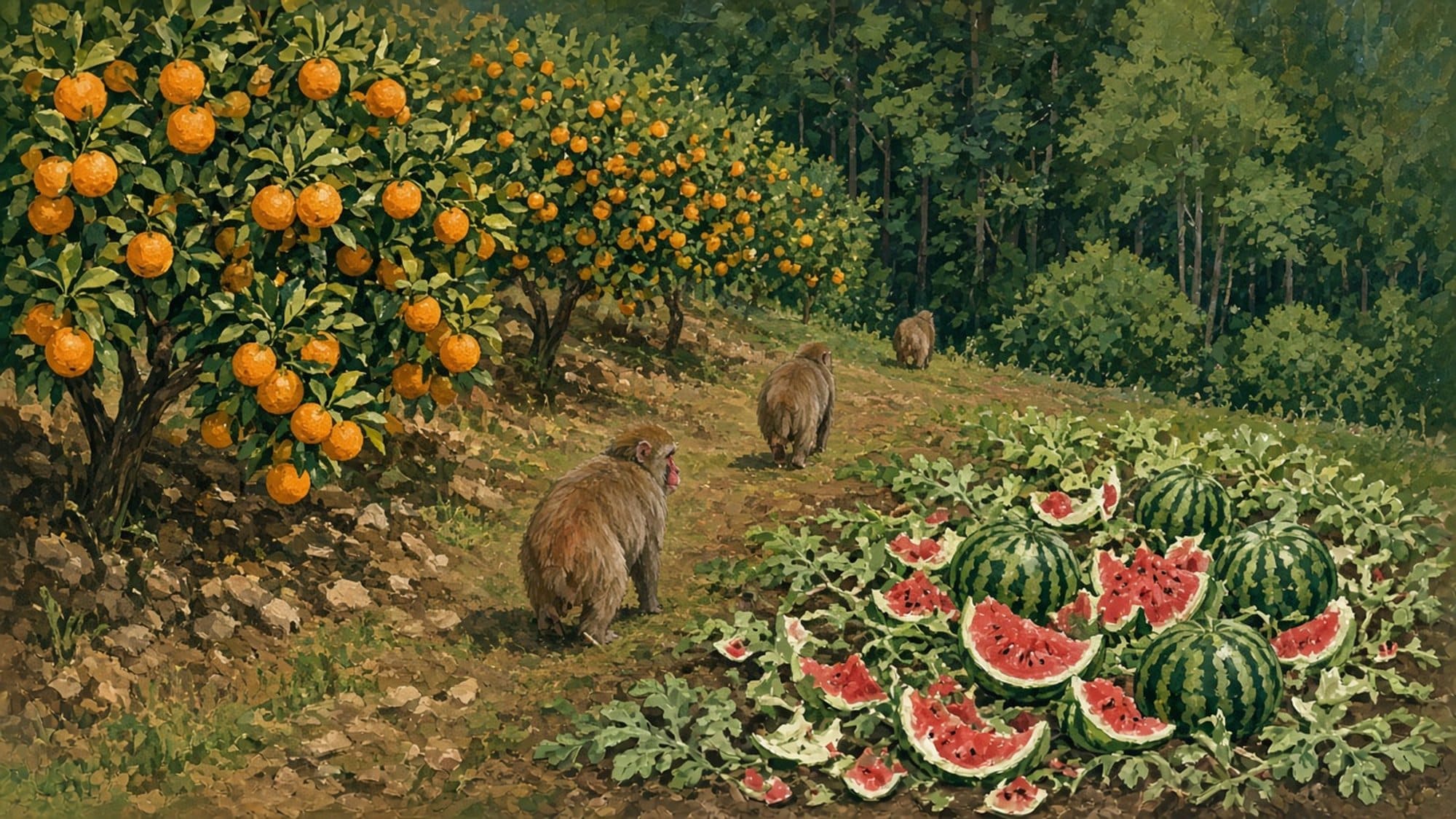
Formal farm figures capture only part of the burden. Kanagawa's fiscal 2026 supplement records ¥16,000 in T1 crop losses in Yugawara as of September 2025, mainly citrus and vegetables. In the town's separate household survey, 453 respondents recorded 6,054 entries across its life damage categories for 2025. Those included 483 reports of gardens or flowerbeds being disturbed or vegetables taken, and 318 of fruit taken from garden trees. These are survey counts, not a census of monkeys or a count of unique encounters.
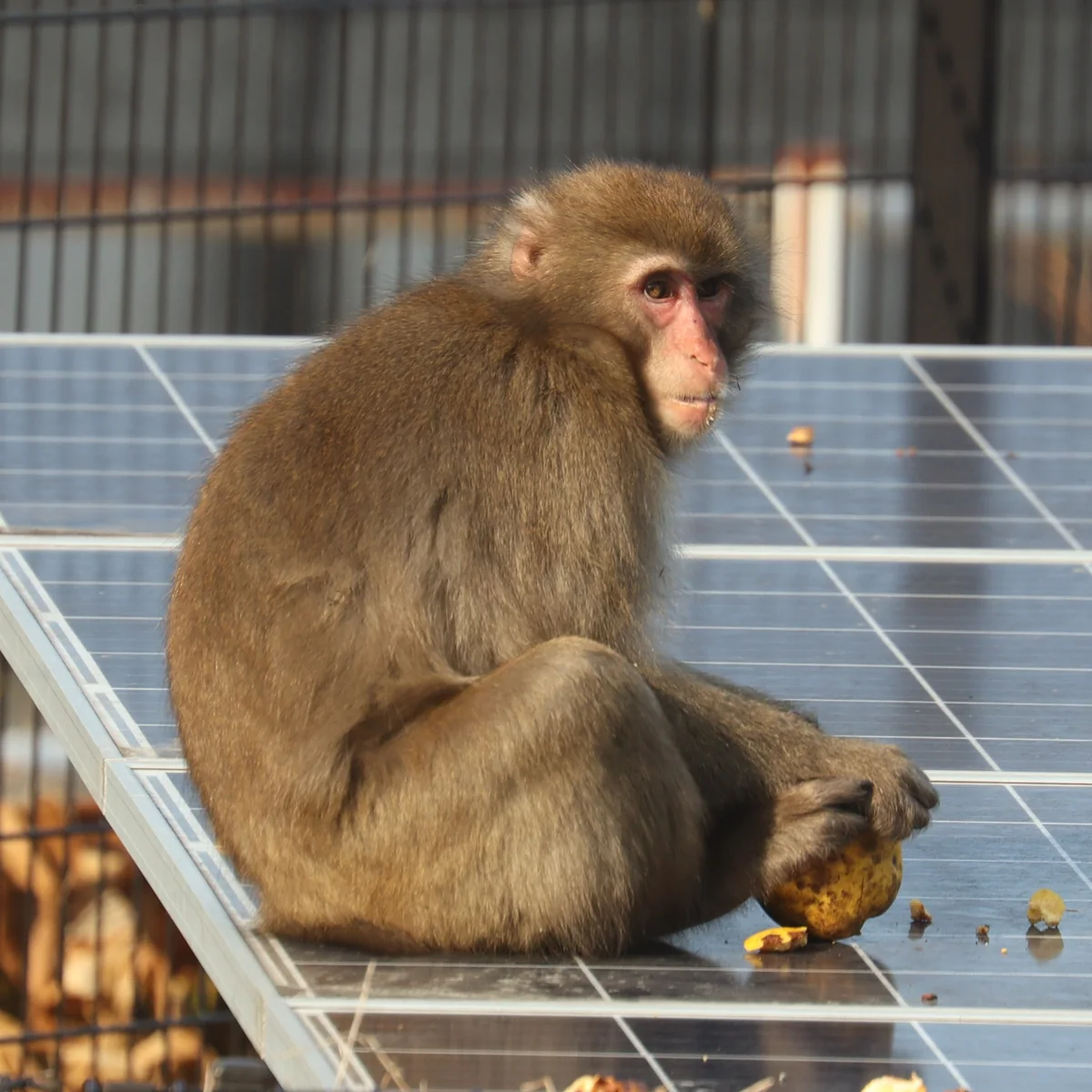
The conflict also has a human history. Kanagawa says people once fed macaques for tourism. Organized feeding ended, and the troop has gradually moved away from dependence on people.
Feeding one monkey is not a harmless private moment. It teaches a wild animal that the next garden, balcony or person carrying a bag may also offer food.
What to do when you meet one
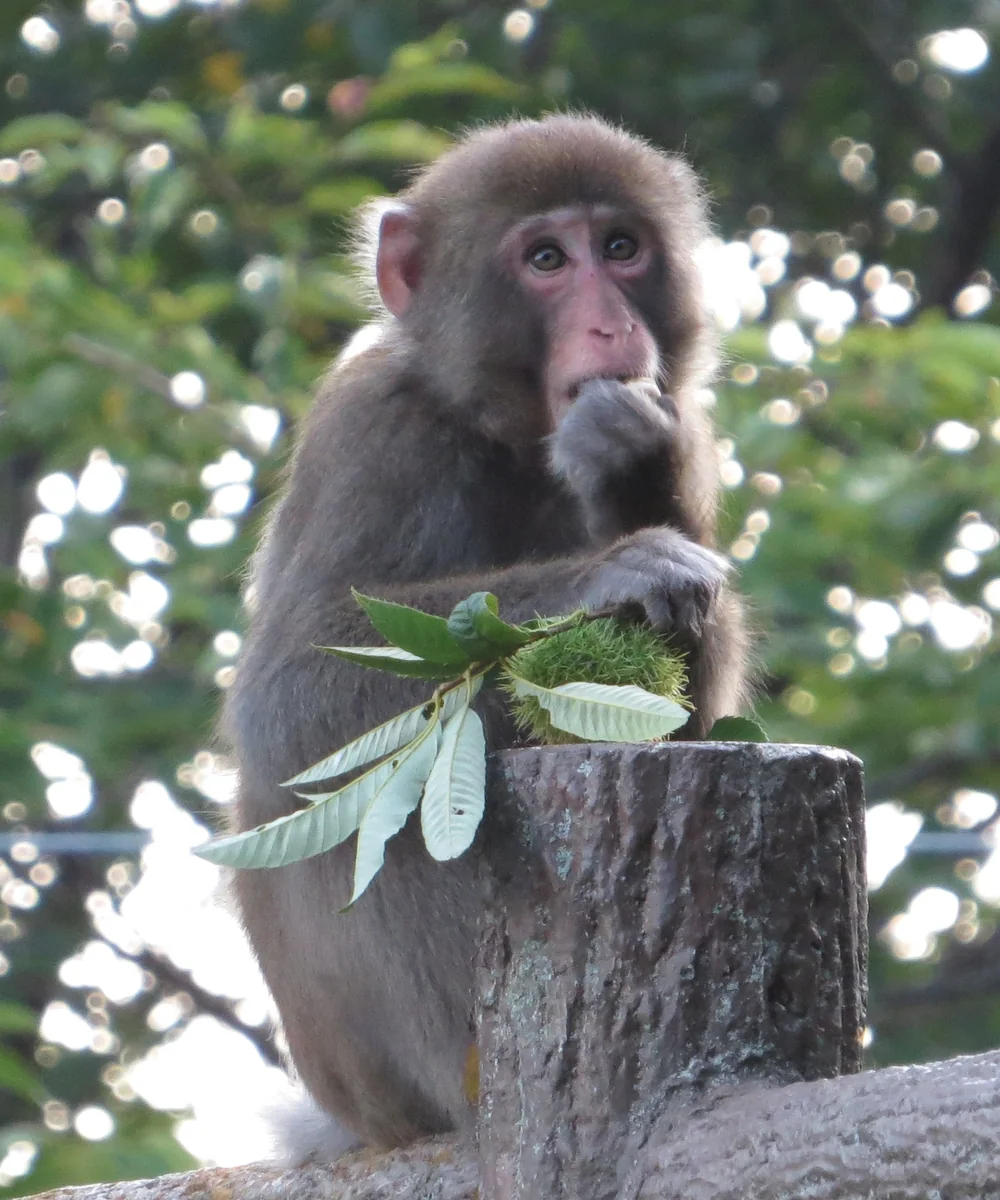
The town's advice is plain: do not feed macaques, show them food, approach them or block their escape route. Avoid staring into their eyes. Do not shout or run. Move away quietly.
If children are nearby, bring them inside. Close and lock doors and windows. Residents are asked to remove unwanted fruit and vegetables, protect crops properly and report agricultural or household damage through the town's online forms.
For visitors, the rule is even shorter: enjoy the sight without turning it into an encounter. Keep your distance and keep food inside your bag. Do not edge closer for a portrait or offer a snack to make the photograph easier.
Conservation and control are not simple opposites
Official policy has to hold two uncomfortable facts at once. Japanese macaques are native wildlife, and Kanagawa aims to conserve stable regional populations. The same plan aims to reduce agricultural, residential and human injury damage and allows harmful troops to be reduced or removed where necessary.
Kanagawa's fiscal 2026 plan keeps T1 under size adjustment management. The troop supplement lists a group management capture plan of 10 animals. In a separate damage-control category, it lists a Yugawara contract to capture four animals identified as especially harmful. The document does not say whether the categories overlap, so they should not be added together as a 14-animal total. Neither measure is the complete removal requested by the town council.
Yugawara's town council wants a stronger response. On 23 June 2026 it again asked Kanagawa Prefecture for the complete capture and removal of the T1 troop, arguing that existing measures had not ended damage or residents' fear. This is a council request, not a completed policy change.
News report
A local argument for coexistence
Yomiuri TV visited a Yugawara share house affected by the troop and spoke with Masato about the difficult choice between complete removal and coexistence.
Produced by: Yomiuri TV News ↗
There is no tidy ending here. A troop can be part of the regional ecology and still cause serious local harm. Farmers can be exhausted without hating wildlife. Visitors can appreciate a macaque without treating it as entertainment.
Travel through the monkeys' landscape, not toward them
Several Yugawara walks pass through the boundary between houses, orchards and forest. If you see a macaque, stop at a respectful distance and let it choose the route away. The good version of the story is not that you got close. It is that both you and the monkey carried on safely.